
Orofacial Pain Treatment in New York
Facial, muscle and nerve pain the teeth do not explain.
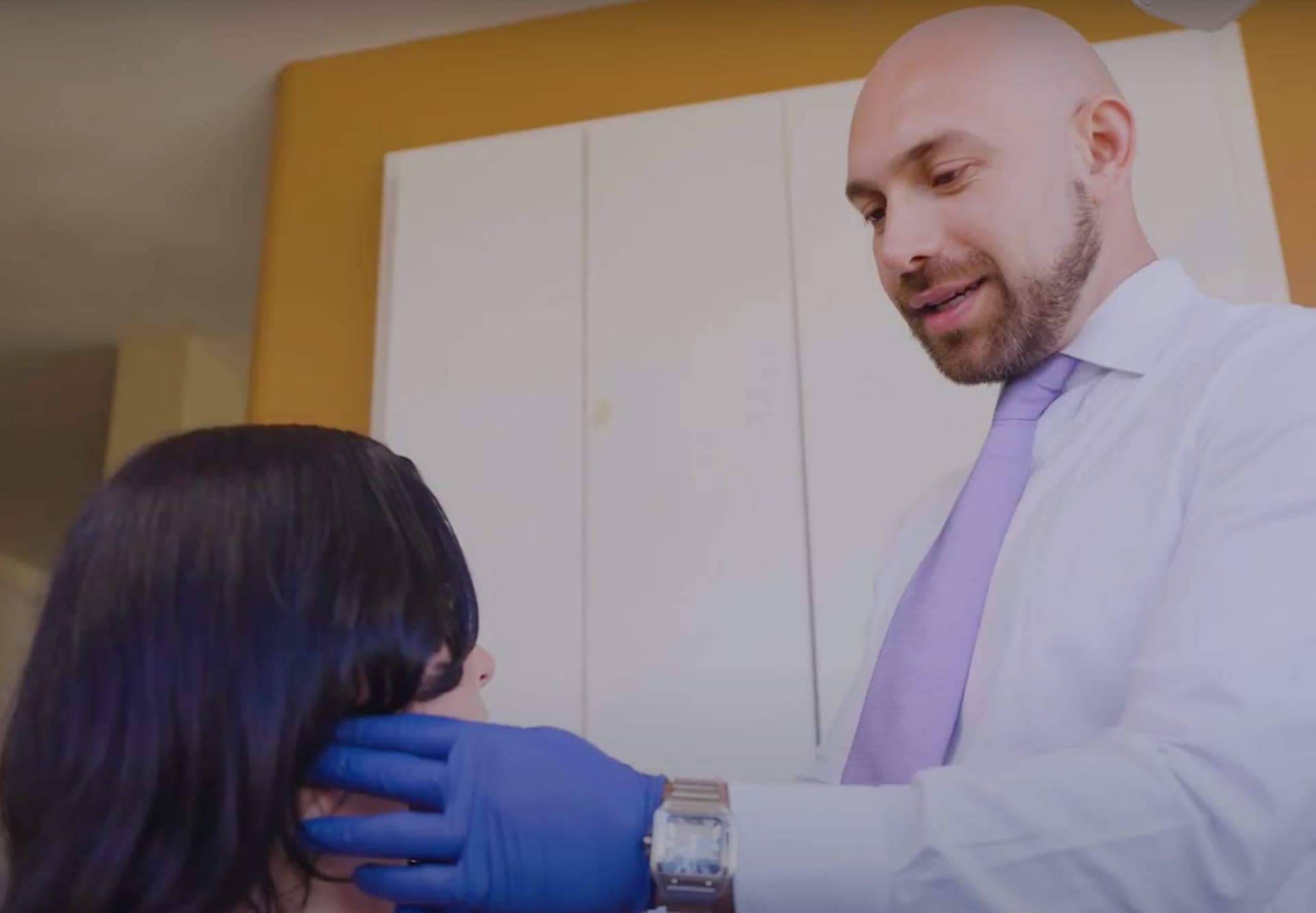
Orofacial pain covers the face, jaw, mouth, and head — pain that is often muscular, sometimes nerve-related, and frequently misattributed to the teeth or the sinuses. Dr. Amin Samadian is a Fellow of the American Academy of Craniofacial Pain, and the work begins with identifying which structure is actually generating your pain.
- Orofacial Pain SpecialistA recognised dental specialty — and what it covers.
- Myofascial PainMuscle pain with predictable trigger points.
- Grinding & ClenchingThe parafunction behind most facial muscle pain.
- Migraines & HeadachesWhen headache is driven by the jaw and neck.
- Neck & Shoulder PainThe cervical half of a jaw problem.
- Trigeminal NeuralgiaElectric, one-sided facial nerve pain.
- Trigger Point TherapyReleasing the knots that refer pain elsewhere.
- Laser PhotobiomodulationLow-level laser for inflamed, painful tissue.
- PRF for Orofacial PainRegenerative injections outside the joint.
- Chronic Pain ManagementWhen pain has outlasted the injury that started it.
Pain in the face is rarely where it starts
Facial pain refers. A trigger point in a chewing muscle can present as an earache, a toothache, or a headache behind the eye, which is why orofacial pain is so often treated in the wrong place — sometimes with dental work on a healthy tooth. Mapping where the pain originates, rather than where you feel it, is the first and most valuable step.
Muscle pain and myofascial trigger points
The muscles that close your jaw are powerful and are used constantly. Sustained clenching leaves them tender, shortened, and prone to trigger points that radiate pain across the face and temple. Treatment here is conservative and physical: targeted therapy for the involved muscles, habit change, and addressing whatever is driving the overuse in the first place.
Therapeutic injections, when muscles will not settle
For muscle-driven facial pain that has not responded to conservative care, targeted therapeutic injections can quiet an overactive muscle enough for it to recover and for other treatment to take hold. This is used selectively and as part of a plan, never as a standalone answer. Candidacy is decided at consultation.
Chronic pain deserves a plan, not a single visit
Pain that has been present for months behaves differently from new pain — the nervous system adapts to it, and treatment has to account for that. Care is structured over time, with sleep, posture, stress load, and parafunctional habits treated as part of the picture rather than as an afterthought.
How care works in New York
Start with a private virtual consultation from anywhere in New York. Chronic facial pain histories are long, and a video visit is a better setting to walk through yours than a rushed first appointment. If in-person care is appropriate, we schedule it and confirm your New York location at booking.
Common questions
- My dentist says my teeth are fine, but my face still hurts. What now?
- That is one of the most common reasons people arrive here. Healthy teeth with persistent facial pain usually points to a muscular or joint source, or to referred pain. An orofacial pain evaluation is designed to find which.
- Is orofacial pain the same as TMJ?
- They overlap but are not identical. TMJ disorders involve the joint and the muscles that move it; orofacial pain is the broader category, including nerve pain and muscle pain that may have nothing to do with the joint. Both are evaluated together here.
- Could this be a headache or migraine problem instead?
- It can be both, and they interact — jaw muscle pain can trigger and worsen headaches. Where a primary headache disorder appears to be driving symptoms, we co-manage with your physician or neurologist rather than treating around them.
- Will I be given a night guard and sent home?
- Not by default. An appliance is one tool among several, and it is only useful when it targets what is actually causing your pain. If it is not the right tool for you, we will say so.
Patients of Dr. Samadian
Written by patients treated across the Dion Health practices.
“I found myself dealing with a number of medical issues that I had no idea were so directly tied to my sense of oral wellbeing. The professionals at Dion Health helped me resolve my clenching and grinding, leading to better sleep and a more enjoyable lifestyle.”
“When I'm dealing with a run-of-the-mill dental issue—or need something more serious like an implant, bridge, or crown—I know I can trust the Dion Health network to provide me with the most advanced techniques, for results that last.”
“Showing off a glowing smile has me feeling more confident than I've ever felt in my life. Dion Health has fully rehabilitated my smile, resolving all my cosmetic issues with long-term solutions and helping me enjoy the self-esteem I deserve.”
Real patient stories
Patients Dr. Samadian has treated describe their experience in their own words.
Lindsay — TMJ patient
Olivia — TMJ patient
Chihiro — TMJ patient
Testimonials reflect the experiences of individual patients. Individual results vary.
Credentials and affiliations


Not sure which applies to you?
Most people arrive with symptoms, not a diagnosis. Request a virtual consultation and we will tell you what we think is going on.
Request a consultation